
Moving to Thousand Oaks: A 2026 Relocation Guide to Addresses, Schools, Costs and Commutes
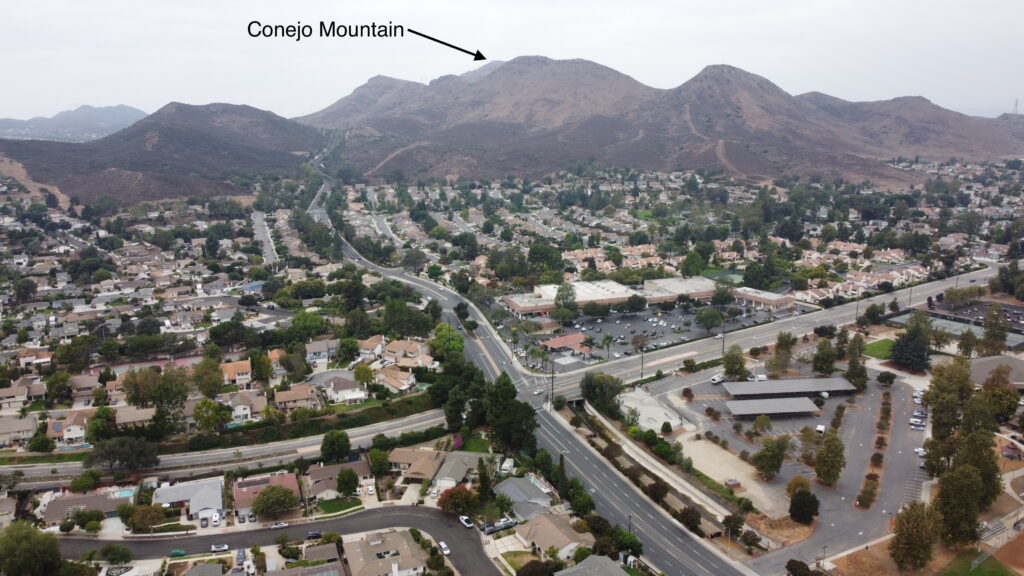
Most people who call me about moving to Thousand Oaks have already done the basic research. They know about the schools, the open space and Amgen. What they usually have not worked out yet is how the city is put together: three mailing addresses, one school district with firm boundaries, a property tax system that works differently from most states, and a commute that depends heavily on which side of the valley you land on. This guide is the briefing I give out-of-area buyers before they fly in to tour homes.
One city, three addresses
The City of Thousand Oaks incorporated in October 1964 and now covers most of the Conejo Valley in southeastern Ventura County, with about 126,000 residents. Inside its limits, homes carry one of three mailing addresses, and buyers often do not realize they are shopping in the same city.
Thousand Oaks (91360, 91362)
The central valley and the north side: the 1960s and 1970s neighborhoods around Hillcrest Drive, Moorpark Road and Janss Road, Cal Lutheran and the streets around it, and newer hillside areas such as Lang Ranch at the northeast edge. This is where you find the widest range of house ages and sizes.
Newbury Park (91320)
The western part of the city, about 40 percent of its land area. Most of Newbury Park was annexed into Thousand Oaks in the late 1960s and 1970s, and it includes neighborhoods from the 1960s through the Dos Vientos development, which was approved in 1988 and built mostly from the late 1990s onward. A few pockets, including Casa Conejo, Ventu Park and Kelley Estates, are still unincorporated Ventura County.
Westlake Village and North Ranch (91361, 91362)
This is the one that confuses people. The City of Westlake Village is a separate city in Los Angeles County. But about two-thirds of the original Westlake master plan was annexed into Thousand Oaks in 1968 and 1972, and North Ranch followed in 1973. Those homes have Westlake Village mailing addresses, sit in Ventura County, pay Thousand Oaks and Ventura County taxes, and attend Conejo Valley schools such as Westlake High. A Westlake Village address on the Los Angeles County side, by contrast, is in the Las Virgenes school district. The county line, not the ZIP code, decides it.
| Address | County | City services | School district |
|---|---|---|---|
| Thousand Oaks | Ventura | City of Thousand Oaks | Conejo Valley Unified |
| Newbury Park | Ventura | City of Thousand Oaks (except unincorporated pockets) | Conejo Valley Unified |
| Westlake Village / North Ranch, Ventura County side | Ventura | City of Thousand Oaks | Conejo Valley Unified |
| Westlake Village, Los Angeles County side | Los Angeles | City of Westlake Village | Las Virgenes Unified |
If you are deciding between these, the Thousand Oaks, Newbury Park and Westlake Village area pages break down the neighborhoods in more detail.
Schools: Conejo Valley Unified and boundary checks
Public schools across the city are run by the Conejo Valley Unified School District. The comprehensive high schools are Thousand Oaks High, Newbury Park High and Westlake High, and the district also runs a continuation high school, Conejo Valley High, along with several middle and elementary schools in each area. Oak Park, the unincorporated community just east of North Ranch, has its own separate district.
School assignment is by address, and boundaries do not always follow neighborhood names. Two homes a few blocks apart can feed into different elementary or middle schools. Transfers within the district are possible in some cases but are not guaranteed, so plan around the school the address is assigned to. Before you write an offer, confirm the assigned schools directly with the district for that exact address, and do not rely on a listing description or a third-party website.
Rent first or buy first?
There is a real case for renting first if you are coming from far away and do not know the area. Thousand Oaks is bigger than it looks on a map, and the differences between, say, Dos Vientos and the streets near the Civic Arts Plaza are hard to judge from photos. A six- to twelve-month lease lets you learn the commute, the microclimates and the schools before you commit.
The trade-off is cost and timing. Rental inventory for single-family homes in good school areas can be thin, you pay to move twice, and rates and prices may change while you wait. Buyers who already know which school they want and which direction they commute often do fine buying first, especially if they spend a full weekend here driving the routes at rush hour. If you rent, ask your landlord for a lease that lets you leave early with notice, since the right house may come up before the lease ends.
Budget beyond the mortgage
Property taxes and Prop 13
California's Proposition 13 sets your assessed value at the purchase price, and the assessed value can then rise by no more than 2 percent a year while you own the home. The base tax rate is 1 percent of assessed value, plus voter-approved bonds and local charges, which is why total rates vary from tract to tract. Shortly after you close, expect a supplemental tax bill covering the difference between the seller's old assessment and your purchase price. Many buyers are caught off guard by it, so set the money aside.
Special taxes and assessments
Some properties carry special taxes or assessments on top of the base rate, such as community facilities district (Mello-Roos) taxes, landscape or lighting districts, or bonds tied to a specific development. Buyers often ask about this in newer tracts like Dos Vientos and Lang Ranch. The reliable way to know is to read the current property tax bill and the Natural Hazard and tax disclosure report for that parcel, which lists any special districts. Do not assume either way based on the neighborhood.
HOAs
Many Thousand Oaks neighborhoods, especially those built from the 1980s onward, have homeowners associations. Dues and what they cover vary widely: some only maintain common landscaping, others run pools, tennis courts or gates. Ask for the budget, reserve study, rules and recent meeting minutes early in escrow, and check for pending special assessments.
Insurance and fire risk
Thousand Oaks is ringed by open space, and much of the city's edge is mapped as fire hazard area. In November 2018 the Hill and Woolsey fires started within minutes of each other and forced widespread evacuations; the Woolsey Fire burned nearly 100,000 acres across Ventura and Los Angeles counties. Homeowners insurance has become harder to place in parts of California, and some hillside properties end up on the California FAIR Plan with a separate policy to fill the gaps. Get quotes within the first few days of escrow, and read the Natural Hazard Disclosure for the property's fire zone.
Commute routes
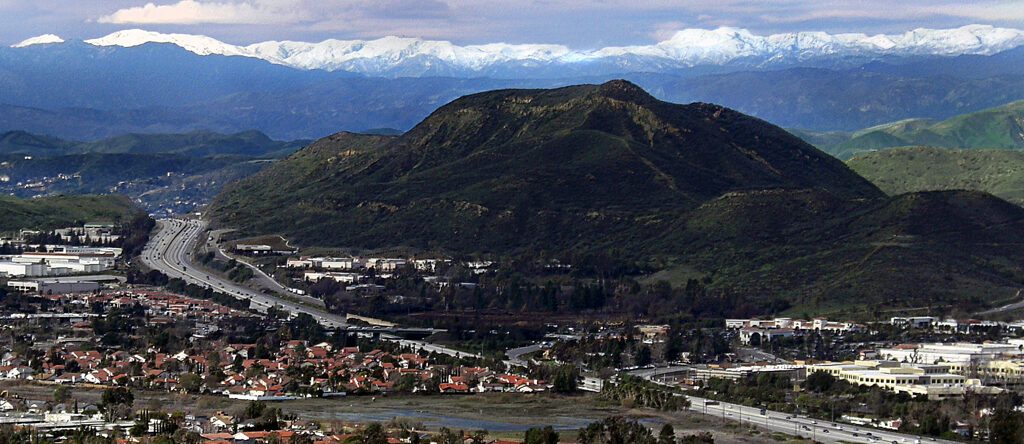
- US 101 east runs through Westlake Village, Agoura Hills and Calabasas into the San Fernando Valley and the 405. This is the main commute for anyone working in Los Angeles, and peak-hour traffic can vary a lot from day to day.
- US 101 west climbs out of Newbury Park and drops down the Conejo Grade, a 7 percent grade into Camarillo and the Oxnard Plain. Commuters to Camarillo, Oxnard, Ventura and Santa Barbara go this way.
- State Route 23 (the Moorpark Freeway) heads north from the 101 to Moorpark and the 118, which connects to Simi Valley and the north San Fernando Valley. It was widened starting in 2008 after years of rush-hour backups.
- Westlake Boulevard (also Route 23) heads south over the mountains to Mulholland Highway and Pacific Coast Highway, the slow but scenic way to Malibu.
Before you buy, drive your actual commute at the hour you would actually make it. A home near the 23 interchange and one at the far west end of Dos Vientos can make very different mornings even though they share a city.
Climate and microclimates
Thousand Oaks has a Mediterranean climate, with dry summers and most of its roughly 17 inches of annual rain falling in winter. It is warmer than the coast and cooler than the inland valleys, but there is real variation inside the city. Newbury Park often sees summer highs near 80 degrees, when central Thousand Oaks may be closer to 90. The western neighborhoods get more morning marine layer, and the canyon and hillside areas can catch stronger Santa Ana winds in fall. If you are sensitive to heat or wind, visit the specific neighborhood on a warm afternoon.
Open space and trails
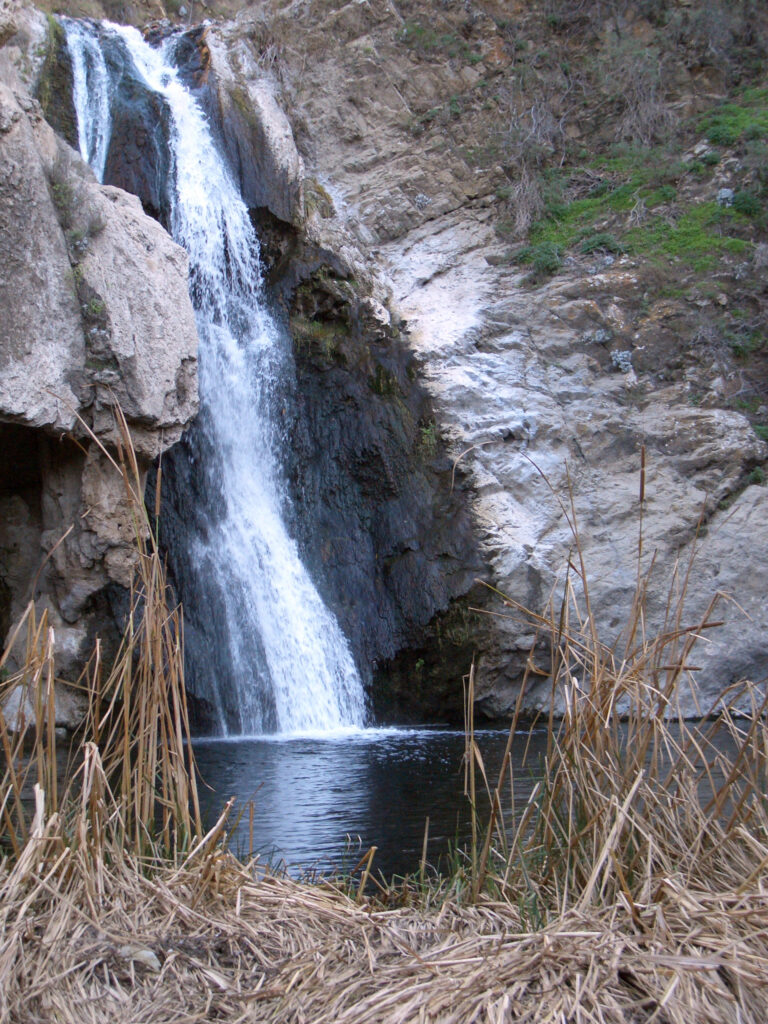
Open space is one of the main reasons people choose Thousand Oaks. The Conejo Open Space Conservation Agency (COSCA), formed in 1977 by the city and the Conejo Recreation and Park District, owns or manages more than 12,700 acres and more than 150 miles of trails. Roughly a third of the city's land is preserved open space. Some of the most-used spots:
- Wildwood Regional Park, on the west side of the city, with Paradise Falls and trails along the Arroyo Conejo.
- Rancho Sierra Vista/Satwiwa in Newbury Park, a National Park Service site with the Satwiwa Native American Indian Culture Center and trail connections into Point Mugu State Park and down to the ocean.
- Los Robles Trail along the south side of the city, linking several open space areas.
- Lang Ranch and the Conejo Canyons on the north side, with quieter trails and creek corridors.
Daily life
Day-to-day life centers on a few places. The Oaks, which opened in 1978, is the largest shopping mall in Ventura County. Downtown, the Civic Arts Plaza, designed by architect Antoine Predock and opened in 1994, holds City Hall and the 1,800-seat Fred Kavli Theatre. It was built on the former site of Jungleland USA, the animal park that operated on Thousand Oaks Boulevard until 1969. Next door, The Lakes, opened in 2005, has restaurants, shops and a grocery store.
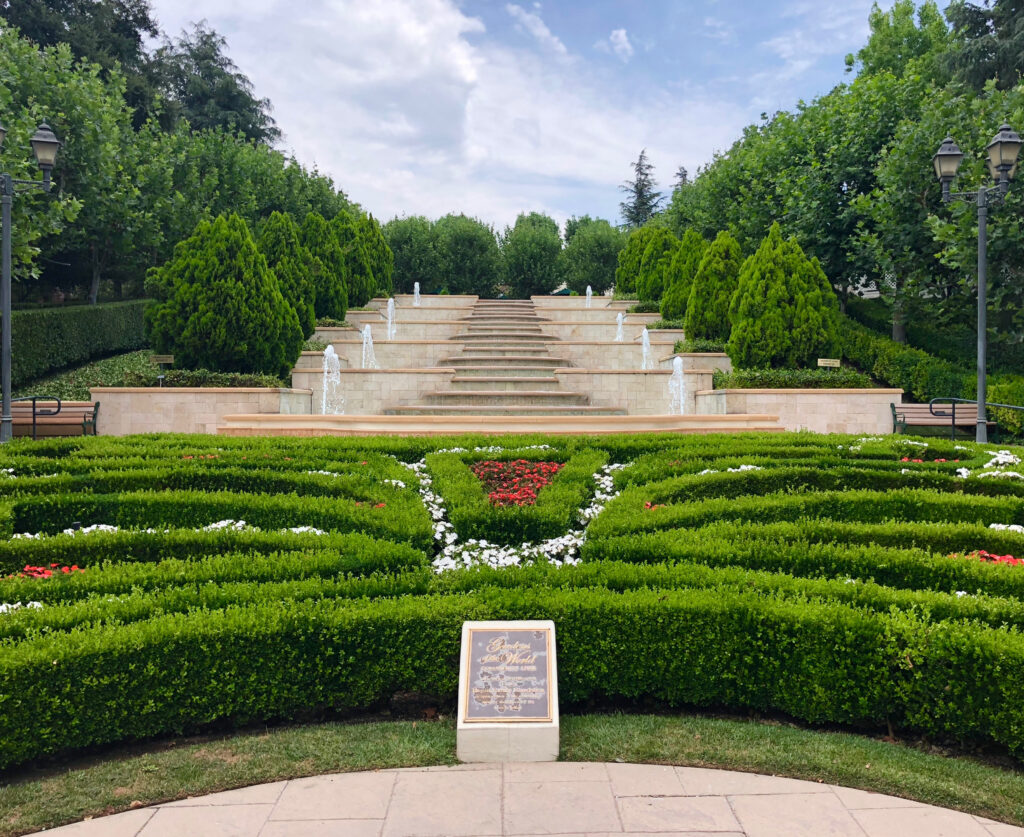
Los Robles Regional Medical Center on Janss Road is the main hospital in the city and one of its largest employers. Amgen, headquartered in Newbury Park, is the largest. California Lutheran University adds concerts, lectures and the Scandinavian Festival each spring. For gardens, there are the Gardens of the World on Thousand Oaks Boulevard and the 33-acre Conejo Valley Botanic Garden.
A move-in checklist
- Confirm the county, city and school district for the exact parcel, not the ZIP code.
- Get the assigned schools from the district for the address and ask about enrollment timelines.
- Request insurance quotes within the first few days of escrow.
- Read the Natural Hazard Disclosure, the tax disclosure and the latest property tax bill for special assessments.
- Review HOA documents, dues and any pending special assessments.
- Budget for the supplemental property tax bill after closing.
- Drive your commute at rush hour from the specific neighborhood.
- Set up utilities: water service varies by area, so ask which provider serves the address.
- Register vehicles with the California DMV within 20 days of becoming a resident.
- Sign up for Ventura County emergency alerts and learn your neighborhood's evacuation routes.
When you are ready to look, you can browse Thousand Oaks listings or Newbury Park listings. If you already own a home elsewhere in the area and are moving within the valley, a home valuation will help you plan the sale and purchase together.
Frequently asked questions
Is Newbury Park a separate city?
No. Newbury Park is part of the City of Thousand Oaks, with its own mailing address and ZIP code, 91320. A few small pockets, such as Casa Conejo and Ventu Park, are unincorporated Ventura County.
Is a Westlake Village address in Thousand Oaks?
It can be. Westlake Village addresses on the Ventura County side, including North Ranch, are inside the City of Thousand Oaks and attend Conejo Valley Unified schools. The City of Westlake Village is in Los Angeles County and served by Las Virgenes Unified. Check the county on the parcel record.
Do homes in Thousand Oaks have Mello-Roos taxes?
Some properties have special taxes or assessments and many do not. Look at the current property tax bill and the tax disclosure report for the specific parcel rather than assuming based on the neighborhood.
How far is Thousand Oaks from Los Angeles?
Thousand Oaks sits along the 101 roughly midway between downtown Los Angeles and Santa Barbara. Drive times to the Valley and the Westside depend heavily on the hour, so test the drive at commute time.
Is Thousand Oaks at risk from wildfire?
Yes, especially along the edges of the city that border open space. The 2018 Hill and Woolsey fires forced large evacuations. Insurance cost and availability are part of any budget here, so get quotes early.
Should I rent before buying?
If you do not know the area, renting for six to twelve months can help you choose the right neighborhood and school. If you already know your commute and school priorities, buying first can save a second move.
If you are planning a move to the Conejo Valley and want help narrowing down neighborhoods, schools and commute options, get in touch. Lisa and I can set up a day of tours built around how you will actually live here.